Does God have a plan? – Westminster Shorter Catechism #7

Our plans are often subject to change. The best laid plans don’t always come to pass. But is it really like that with God?

Explore Further

I don’t mention this in the video, but if you would like to read something more about God’s sovereignty and plan, especially in salvation, check out these books:

You might also appreciate Part #9 of the Heidelberg Catechism – “God our Father”.

More Thought for the Week…

This is part of the weekly Thought for the Week series. This series is designed to give a short, 10-15 minute ‘thought’, including a Bible reading and a prayer. Currently I am working through the Westminster Shorter Catechism. You can see all videos on the catechism on this playlist.

Do subscribe to the mailing list if you want to get these delivered in a weekly email, or subscribe directly on YouTube if you want to see them there.

Share this:

Are there more gods than one? – Westminster Shorter Catechism #5

The Bible makes clear that there is only one God. But have you ever thought about the implications of that deceptively simple statement? It’s one of the most fundamental things which has shaped our society for hundreds of years.

Explore Further

Part one of the “Get to know God” series is here.

Counterfeit Gods by Timothy Keller is available from 10 of those.

The God who is There by Francis Schaeffer is available from 10 of those. (A few months ago I wrote about why you should read his book, True Spirituality).

More Thought for the Week…

This is part of the weekly Thought for the Week series. This series is designed to give a short, 10-15 minute ‘thought’, including a Bible reading and a prayer. Currently I am working through the Westminster Shorter Catechism. You can see all videos on the catechism on this playlist.

Do subscribe to the mailing list if you want to get these delivered in a weekly email, or subscribe directly on YouTube if you want to see them there.

Share this:

Who is God? – Westminster Shorter Catechism #4

“Who is God” is one of the most important questions which people never ask. Many people say “I believe (or don’t believe) in God” – but which God? In this session we look at who God is and what he is like.

This is part of the weekly Thought for the Week series. This series is designed to give a short, 10-15 minute ‘thought’, including a Bible reading and a prayer. Currently I am working through the Westminster Shorter Catechism. You can see all videos on the catechism on this playlist.

Do subscribe to the mailing list if you want to get these delivered in a weekly email, or subscribe directly on YouTube if you want to see them there.
Share this:

God is… three persons (Trinity)

In this final part of our Get to know God series, we turn to thinking about how God is three persons – Father, Son and Holy Spirit. This is traditionally known as the doctrine of the Trinity. Sometimes people can have the idea that the Trinity is too difficult to think about, or it doesn’t really make much difference to everyday life. But, as theologian D.B. Knox said: “The doctrine of the Trinity is the foundation of the Christian religion”. It’s essential to our Christian lives: we experience God as Trinity. It matters that we don’t just think of ‘God’, but think in terms of the Father, Son and Spirit.

Obviously there are many books which have been written about this topic (and I’ll link to some of them below). We won’t be able to deal with the whole doctrine of the Trinity in one session! But I hope this will at least make a start so you want to continue learning yourself.

Let’s start by thinking about what the Bible says, before we go on to look at why it matters for us day-by-day.

What does the Bible say about the Trinity?

The doctrine of the Trinity is somewhat veiled in the Old Testament. That is, it’s there if you know what you’re looking for – there are some passages which don’t make sense any other way. And yet, we don’t really get the full picture until the New Testament. Because we don’t have much time here, we’ll concentrate on the New Testament for the moment.

Continue reading “God is… three persons (Trinity)”
Share this:

God is… infinitely good

In this eighth part of the Get to know God series, we are thinking about how God is good. Not just good – God is infinitely good. He is the very definition of goodness itself. But what does it mean for God to be good? What does that look like? And what does it mean for us in our lives and how we relate to him? Let’s start, as always, by looking at the Bible before we turn to think about what it means for us.

What does the Bible say about God’s goodness?

Only God is good

A man once came to Jesus to ask him a question. The man called him “Good teacher”, but Jesus responded: “Why do you call me good? No one is good – except God alone” (Mark 10:18). Jesus didn’t respond like this because Jesus was saying he wasn’t good (we’ll come onto that in the final session!). But he wanted the man to think about what he was saying. Who is truly good? Only God is truly good.

If we want to see and know what true goodness is, we need to look to the Lord. He alone has true goodness. He is 100%, pure good. And, at the risk of stating the obvious, it’s worth making the point that the opposite of good is evil. That which is not good is evil.

You might be thinking – if God alone is good, what does that say for human beings? Are human beings not good? Or, at least, can human beings not be good? We’ll come onto that question in a minute!

Continue reading “God is… infinitely good”
Share this:

God is… infinitely wise

In the seventh part of the Get to know God series, we’re looking at how God is infinite in wisdom. We’ll think a little bit about what wisdom is, how it relates to God, and what we need to do. As usual for this series, firstly we’ll look at what the Bible says, and then we’ll think through some practical points for us.

What does the Bible say about God’s wisdom?

Wisdom belongs to God

Where then does wisdom come from?
   Where does understanding dwell?
It is hidden from the eyes of every living thing,
   concealed even from the birds in the sky.
Destruction and Death say,
  ‘Only a rumour of it has reached our ears.’
God understands the way to it
   and he alone knows where it dwells
Job 28:20-23

Wisdom is something that God alone possesses. This is echoed in the New Testament in Romans 16:27 where Paul says, “to the only wise God”. Wisdom is something that God simply has perfectly and infinitely, it is part of who he is.

In the Bible, wisdom is about making good and right decisions. (If you’re interested, I have a post about Wisdom and Guidance in Proverbs). It’s about doing what is good and avoiding what is evil. We human beings have limited wisdom – and we’ll come onto that later. But this is not the case with God.

God doesn’t have to listen to advisers to tell him what the right course of action is. God simply knows, because he is perfect wisdom. We human beings are capable of making poor decisions for all sorts of reasons. Maybe we make decisions based on misunderstanding or incomplete knowledge. But God never has that problem: all of his decisions are perfect. God never has to worry about which way to go – he always knows.

Continue reading “God is… infinitely wise”
Share this:

God is… infinitely powerful (omnipotent)

The sixth part of our Get to know God series looks at God’s omnipotence – the fact that he is infinitely powerful. I don’t know about you, but I’ve found the last couple of sessions have dealt with some pretty tough concepts. This week is, I hope, slightly less tough in that respect. But that doesn’t mean there isn’t plenty here to get your head around – and plenty to be encouraged by. Let’s look into it. We’ll start out by drawing out a few points from the Bible, and then we’ll think about what it means for us.

What does the Bible say?

No-one is powerful like God

No one is like you, Lord; you are great, and your name is mighty in power.

Jeremiah 10:6

The Bible often describes God’s power as being incomparable. Nothing else in all creation could come anywhere close to matching his power. His power is often seen in the things that he does.

Continue reading “God is… infinitely powerful (omnipotent)”
Share this:

God is… impassible (without passions)

In this fifth part of the Get to know God series, we’re looking at something called God’s impassibility. This is a really important aspect of God, and yet out of all of them this is probably the least popular. Part of the problem is that people don’t understand what ‘passions’ means! But this is important for understanding who God is: do we want a God who is actually able to help us in our suffering? For that, we need a God who is impassible.

What does impassible even mean?

A few years ago, a friend of mine wrote an article defending God’s impassibility. He started out with a brief definition of impassibility:

Divine impassibility refers to the belief that God can neither be acted on from without, nor experience ‘emotional’ change within, and that, more specifically, God can thus neither be caused to suffer, nor choose to suffer, in his divine nature.

This is a good definition to be going on with. Impassibility, or being ‘without passions’, means that God doesn’t have emotions in the same way that we do. (This is especially true about suffering – God does not suffer). Emotions, as it says, are about change: we human beings generally can’t go through a day without experiencing a number of emotional changes. An emotion is a change. But – as we have already thought about – God does not change. God is constant. That’s good news for us!

It’s good news because it means that God is not changeable like us, but is above our ways. Let’s take a look at the Bible to see what it says.

Continue reading “God is… impassible (without passions)”
Share this:

God is… simple (without parts)

In this fourth part of the Get to know God series, we’re going to be looking at God’s simplicity, or the fact that God is “without parts”. Now, simplicity is probably the most misleading word in the theological dictionary! It’s a very particular definition of simplicity which has very little to the way that we use the word in common speech. It is important, however, because I think it has a direct bearing on issues in our society today.

But let’s go into what simplicity is. Let’s start out by thinking about a jigsaw.

Continue reading “God is… simple (without parts)”
Share this:

God is… everywhere (spiritual, without body)

This is part three of the “Get to know God” series. Here we are considering that God is spiritual – he doesn’t have a body (sometimes called incorporeal). We’ll also look at what theologians call omnipresence, that is, being present everywhere. I know it may seem like these are big words, but I promise you, it will be worth looking into it!

So let’s start by looking at what the Bible says. After that, we’ll spend some time thinking about what it means for us.

What does the Bible say?

God is everywhere

‘Who can hide in secret places so that I cannot see them?’ declares the Lord. ‘Do not I fill heaven and earth?’ declares the Lord.

Jeremiah 23:24

The Bible is clear that God cannot live in a house like a human being. As the quote from Jeremiah says – God “fills heaven and earth”. God is big, filling the universe itself! This doesn’t mean that God = the Universe. Some people say that – this is known as ‘pantheism’, and the church has always condemned this as a heresy. We need to be clear from the start that God is distinct from the universe as its creator.

Sparrow

God sustains each part of creation moment-by-moment. A Psalm such as Psalm 104 says that God feeds the animals, watches over the seas and all creatures in them, as well as all human beings. Jesus says in Matthew 10:29 that not even a sparrow can fall to the ground outside of God’s care! It is obvious that in order to do that, God cannot be limited to one place (and time). He has to be everywhere, all at once.

God is Spirit

In John 4:24, Jesus says: “God is Spirit”. What does this mean? This is what the Bible scholar Don Carson has to say about these words:

Jesus is not suggesting that God is one spirit amongst many … In this context ‘spirit’ characterizes what God is like, in the same way that flesh, location, and corporeality characterize what human beings and their world are like … ‘God is spirit’ means that God is invisible, divine as opposed to human, life-giving and unknowable to human beings unless he chooses to reveal himself.

In other words, Jesus doesn’t say God is “a” spirit – as if he’s just one of the spiritual beings. The Bible does talk about spiritual beings elsewhere, for example Ephesians 6:12 talks about “spiritual forces of evil in the heavenly realms”. There are spiritual forces in the world – good and evil. Jesus is not saying that God is simply another one of these beings!

Jesus is simply making the point that God is unlike us: we human beings have bodies, we can only be in one place at a time – we are ‘corporeal’. God, on the other hand, does not have those limitations. He is present everywhere, at every place and time. We’ll come back to this a bit later on.

God is bigger than the universe

The final thing here is that God is bigger than the universe. This is similar to the point that we’ve made before, but I think it’s worth saying explicitly. The whole universe was made at God’s command. He is far above any created thing. This often comes across in the prophets, especially Isaiah:

For thus says the One who is high and lifted up,
who inhabits eternity, whose name is Holy

Isaiah 57:15 (ESV)

God dwells in eternity, he is “high and lifted up”. God isn’t just everywhere – he’s far beyond that! The nations are a “drop in a bucket” to him (Isaiah 40:15). It’s important to grasp that the universe is not stretching the limits of God’s power or where God can be – he is far bigger than that!

What does that mean for us?

We’ve thought about what the Bible says about God not having a body. Let’s spend the rest of the time thinking about what difference it makes to us. How can we live differently as Christians knowing this about God?

An encouragement

The first thing is as an encouragement. Wherever we are, whatever situation we’re in, we know that God will be there with us. In these beautiful words from Psalm 139, King David reflects on how wonderful it is:

Where can I go from your Spirit?
Where can I flee from your presence?
If I go up to the heavens, you are there;
if I make my bed in the depths, you are there.
If I rise on the wings of the dawn,
if I settle on the far side of the sea,
even there your hand will guide me,
your right hand will hold me fast.

Psalm 139:7-10
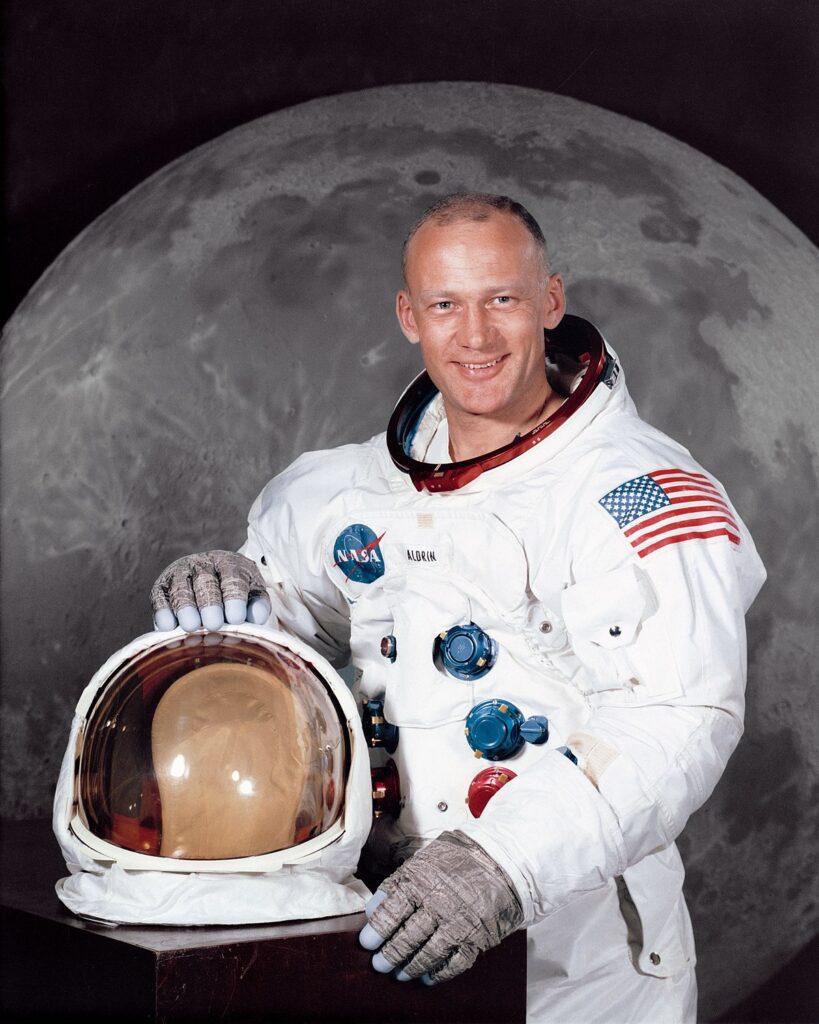
Buzz Aldrin

David praises God because he knows that, wherever he goes, he can never go further than God. No place – however dark – is too dark for God to see. We cannot outrun God. Even the moon! (Did you know – one of the first things that happened on the moon was Buzz Aldrin took communion?)

And God is not just with us all the time, but he guides us and we are held in his hands. God isn’t simply some kind of travelling companion – he’s a guide, a protector, and so on. The reason that God can do all of those things is that God is everywhere, he is unlimited.

Another helpful thing here is that God is able to look after those we love even when we’re miles apart. God is able to answer prayers, even for things which are on the other side of the world. We don’t have to pray for things which are local to us! I find it a great comfort when I’m away from my family to know that they are still in God’s hands, even though they can’t be in mine.

A warning

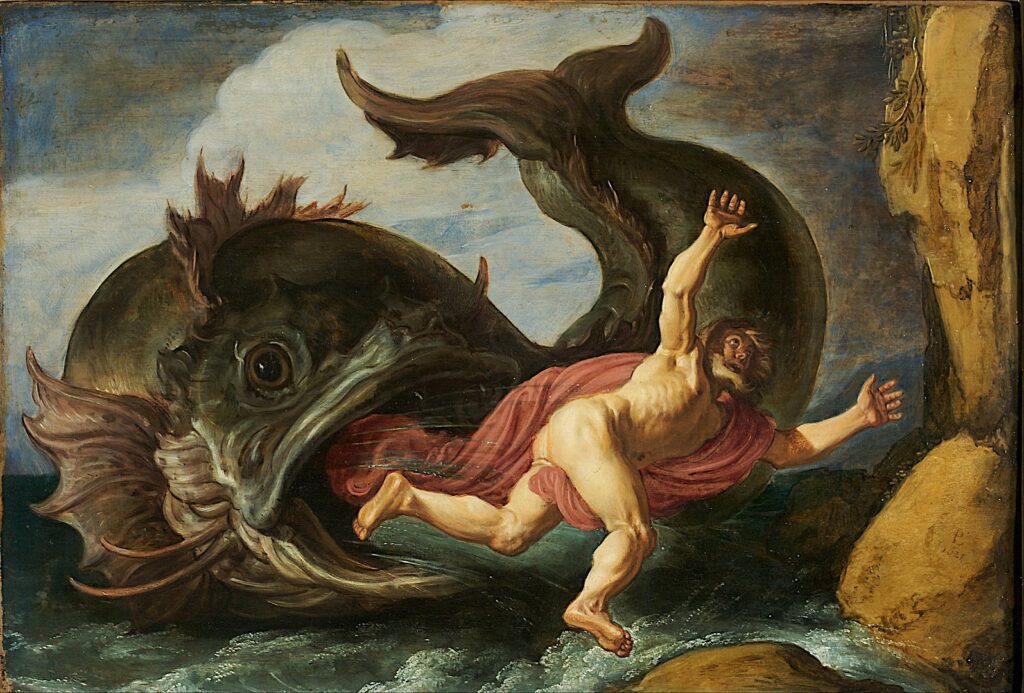
Jonah and the Whale (Painting)

One of the most well-known stories in the Bible is that of Jonah and the whale. If you’re not familiar with the story, you can read it in the Bible (it’s very short!) or there are lots of videos around – like this one for kids. At the start of the story, God calls Jonah to go to the city of Nineveh. Instead, Jonah decides to go in the opposite direction! But he soon finds out that he can’t run away from God.

I think this is an important warning for us to listen to as well: for those who love and trust God, it’s a great thing not to be able to run away from him. For those who do not love and trust God, it’s a warning. In the book of Revelation, on the day of judgement we see people trying to run away from God:

Then the kings of the earth, the princes, the generals, the rich, the mighty, and everyone else, both slave and free, hid in caves and among the rocks of the mountains. They called to the mountains and the rocks, ‘Fall on us and hide us from the face of him who sits on the throne and from the wrath of the Lamb! For the great day of their wrath has come, and who can withstand it?’

Revelation 6:15-17

Obviously, trying to run away from God is futile! This is because we cannot run away from God – he is everywhere.

We need to worship God ‘in spirit and truth’

Earlier on, I quoted John 4:24, where Jesus says “God is spirit”. He continues on: “God is spirit, and his worshippers must worship in the Spirit and in truth”. That means we can’t worship God as if he is some created being. The second of the Ten Commandments expressly forbids worshipping an image of God. The reason is because God is infinitely bigger than any created thing. No statue or anything created could adequately represent God. In fact, any image of God will be a false god – something we thought about in the first session.

God wants us to worship him, but God wants us to worship him in the Spirit and in truth:

In the Spirit means that we can only come to God through the Holy Spirit. We can’t draw near to God like we would a person. With humans beings, we come near to them physically. As God doesn’t have a physical body, we can’t draw near that way! The way to draw near to God is through the Holy Spirit. When we repent of our sins and turn to Christ, when we seek to love, serve and obey God, then we draw near to God. This is how James puts it: “Come near to God and he will come near to you. Wash your hands, you sinners, and purify your hearts, you double-minded” (James 4:8).

Because God is spirit, we can only draw near to him spiritually. It’s not about being a special place e.g. a church or the like – but we draw near to him as we seek and obey him.

In truth means that we need to take on board everything God has said to us about who he is and how he wants us to worship him. Because we can’t see God, it’s all the more important to listen to him rather than simply imagine a God! In Knowing God, Jim Packer quotes the phrase: “for the Christian, the ear is the primary sense organ”. We know about God by listening to him – through his Word, the Bible. If you want to draw near to God, you need to listen to the truth about him.

Finally: this doesn’t mean the body is bad!

One of the mistakes which I think has commonly been made over the last 2,000 years is this: “God is spiritual, and to get close to him I must get more spiritual. Therefore, I should try to avoid anything physical”. A lot of Christians through the ages have decided to be more ‘spiritual’ they should renounce all physical pleasure. Sometimes they do this in quite extreme ways, for example Simeon Stylites lived for 37 years on top of a small platform on a pillar!

The fact that God is spiritual doesn’t mean that the physical is bad. After all, God made the world! God created the world, and made it good. This is something I talk about in the first session of the What is Christianity course.

Being ‘spiritual’ is not about getting away from the physical! Rather, it is learning to use our bodies in a spiritual way. Paul says in 1 Thessalonians 4:3-4, “It is God’s will that you should be sanctified: that you should avoid sexual immorality; that each of you should learn to control your own body in a way that is holy and honourable”. So we shouldn’t avoid anything physical altogether – far from it! Rather, with God’s help we should learn to control our bodies in a spiritual way and enjoy physical things in the way that God intended.

God loves our bodies, God loves the physical world! Being spiritual doesn’t mean being less physical, it just means being physical in the right ways. In fact, I think it means being more physical, because we see the created world as something God made to be enjoyed with him.

Further Reading

Finally, just for a bit of fun, here’s a kid’s song “God is everywhere” by Colin Buchanan…

Share this: