God is… Everlasting

In the second part of our “Get to know God” series, we’re going to think about how God is everlasting or eternal. The Bible teaches that God has always existed, and will always exist. He doesn’t have a beginning or an end. He is not bound by time in the way that we human beings are. Let’s think about what the Bible has to say about God’s eternity, and then think about how it makes a difference in our lives.

What does the Bible say about God’s eternity?

God never had a beginning

Before the mountains were born
or you brought forth the whole world,
from everlasting to everlasting you are God.

Psalm 90:2

One of the most important things to grasp about God is that he never had a beginning. He has always existed. I know that’s hard to get your head around! We human beings are so used to thinking of things in terms of beginning and ending, that it’s very difficult – if not impossible – to really understand how God could be different. But – that is what the Bible teaches.

This is fundamental to who God is. The universe needs to have a “first cause”. In Stephen Hawking’s famous book A Brief History of Time, he tells this story:

Turtles all the way down
‘Turtles all the way down’

A well-known scientist (some say it was Bertrand Russell) once gave a public lecture on astronomy. He described how the earth orbits around the sun and how the sun, in turn, orbits around the centre of a vast collection of stars called our galaxy. At the end of the lecture, a little old lady at the back of the room got up and said: “What you have told us is rubbish. The world is really a flat plate supported on the back of a giant tortoise.” The scientist gave a superior smile before replying, “What is the tortoise standing on?” “You’re very clever, young man, very clever,” said the old lady. “But it’s turtles all the way down!”

If you think about it for a moment, there has to come something at the bottom of the pile. It’s the same thing with creation. If you ask, ‘who created God?’ then you have to ask ‘Who created the person who created God?’ and so on.

Someone or something had to come first.

Continue reading “God is… Everlasting”
Share this:

There is one living and true God

In the first part of the “Get to know God” series, we are thinking about how God is one. What does it mean for God to be one? Why do we make the point that God is “living” and “true”? Let’s dive in!

How many gods are there?

Hear, O Israel: the Lord our God, the Lord is one.

Deuteronomy 6:4
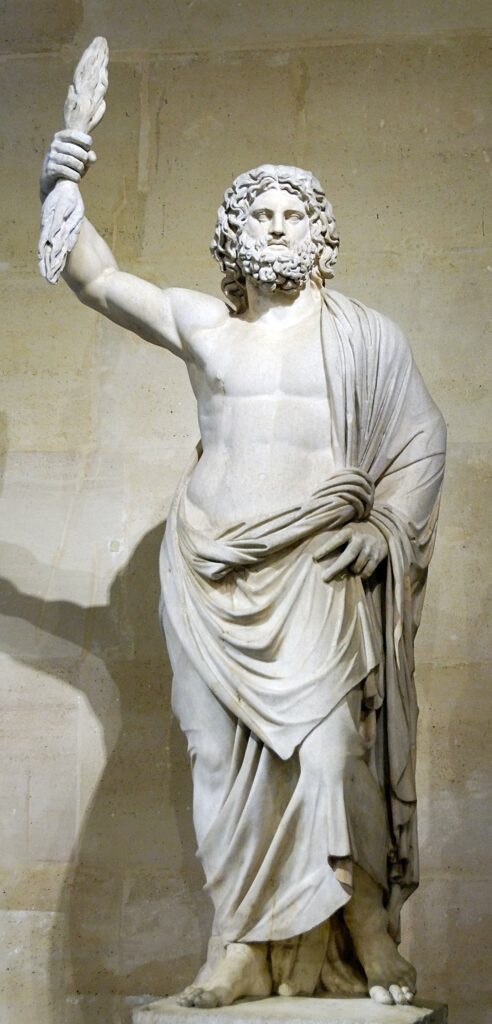
Statue of Zeus
The Greek god Zeus

How do we know there is only one God? The Bible is very clear about it. This verse from Deuteronomy is start of the Shema, which orthodox Jews recite every morning. As they say on that page, “The first verse of the Shema is considered the most essential declaration of the Jewish faith — the Lord is our God, the Lord is one.” Christians and Jews alike believe there is one God. This is known as monotheism, if you want the proper word for it.

This is in contrast to other religions, which believe there are many gods. For example, there are many Hindu gods. The ancient Greeks believed in many gods. such as Zeus – as you can see from the picture.

So, what difference does it make believing there is only one God? Let’s spend a few moments thinking about it.

What is the significance of one God?

1. There are no other gods

This is simply a matter of basic logic. If there is only one God – then there are no other gods. The Bible often contrasts God with ‘the gods of the nations’. For example, Psalm 96:5 says, “For all the gods of the nations are idols, but the Lord made the heavens”. (An ‘idol’ here is something which is worshipped as a god but is not God. If you’d like to look into idolatry more, check out this session from the Heidelberg Catechism course). God, the God of the Bible, is one God. He made everything, and there are no other gods.

This is significant for how we see other religions: Christians believe that Muslims, Buddhists, and Hindus (for example) are mistaken about their gods. Believing in the God of the Bible means not believing in other gods. We can’t pick and choose!

2. There is order, not chaos

Imagine if there was more than one god, like the ancient Greeks. Imagine one god decided that we should be kind to each other. Another god contradicted him and decided that we should be nasty to each other. Whose will should win out? The ancient Greek legends are full of stories of gods warring with each other. If you think about it, it’s absurd: what kind of god would need to war with another god? If God is truly God, then he cannot have any rivals!

This is significant for us, because it gives the universe – and our lives – meaning. The universe is not chaotic, but rather it has an order and purpose. God, the Creator, has made everything for a reason. He has put you here for a reason. He has given you your gifts, interests, circumstances and so on for a reason. They are not simply the product of a chaotic universe.

This is so important to understand. The universe did not come into existence by chance – it was created for a reason. God made the universe with his wisdom behind it. You have been made for a purpose. If there were multiple gods, we couldn’t be sure of that at all. This can only be true if there is one Creator who stands behind creation.

3. There is one set of rules

Lady Justice and the scales of justice

Another significance of there being one God is that there is only one set of rules. Because God made the universe, he sets the rules. God has the sole right to set the rules as our sole Creator.

We recognise something of this today. For example, intellectual property recognises that if you create something, you should have certain rights over it. You can’t simply steal someone else’s creation and pass it off as your own. In law, it belongs to them and they alone have the right to use it. They have the rights because they are the creator.

It’s the same with God: God created the universe, therefore he alone has ‘rights’ over it. We are living in his world, and he gets to set the rules. Fortunately for us, he is a good and loving God – we will come onto that. But let’s move on for now.

What is the significance of a living God?

You might think this is a rather pointless word to put in. Why should we specify that God is living – after all, God isn’t dead! (German philosophers notwithstanding…). The point being made here is not that God is living rather than dead. The point is that God is a personal living being – rather than some kind of impersonal force.

Let’s consider a couple of examples of beliefs where gods are not living.

Non-living gods 1: Deism

What is Deism? According to this page:

Deism (derived from Latin “deus” meaning “god”) is a philosophical belief that posits that God exists as an uncaused First Cause ultimately responsible for the creation of the universe, but does not interfere directly with the created world. … It also rejects revelation as a source of religious knowledge and asserts that reason and observation of the natural world are sufficient to determine the existence of a single creator or absolute principle of the universe.

So, in Deism, there is one God – but it is very unlike the Christian God. The Deist God is basically the source of everything in the world, but one who is not involved in the universe day-by-day. You can’t pray to or have a relationship with the Deist God. This kind of belief is still alive and well today – in fact, let’s look at the example of Jordan Peterson.

Non-living gods 2: Jordan Peterson

Jordan Peterson has made a name for himself by looking at Biblical texts such as Genesis to try and find meaning in the world. He sometimes talks about “God” – but what does he mean by that? Merion West argues:

Peterson’s conception of God is best understood as being the individual human being’s self-conscious relationship with what they value … For Peterson, as for Tillich, God is a term individuals apply to what is of “highest concern” to themselves. For the rich man, this is money. For the scientist, it is knowledge of the world as it truly exists.

This is very different to the Christian concept of God! For Peterson, God is not a personal being who you can relate to. In a nutshell, for Peterson, God is not a living being. This is why it’s important to say that God is living!

What does the Bible say about God living?

The Bible is full of language about God living. There are hundreds of verses we could look at. One of the most significant is Revelation 4:11:

‘You are worthy, our Lord and God,
to receive glory and honour and power,
for you created all things,
and by your will they were created
and have their being.’

This verse says that God didn’t just create everything, but he sustains everything as well. We have our being in God. God is not some kind of Deist God, who simply made everything and then disappears. He creates and sustains everything, moment-by-moment.

Not only that, but he wants us to relate to him. The early chapters of Genesis make clear that God created man to be in relationship with him. For example, Genesis 3 tells of when God was “walking in the garden in the cool of the day” – and speaks to Adam and Eve. From the very beginning of the human race, we have been made for relationship with God. (If you’d like to explore more of what Genesis means for us, the first two sessions of the What is Christianity course cover this).

As the apostle John puts it, God is love (1 John 4:8). You could not describe an impersonal force or an idea in this way! God is fundamentally relational and loving. This is why we need to describe God as ‘living’.

What is the significance of a true God?

Finally, let’s look at God being “true”. Why describe God as true – isn’t that just redundant? After all, God can’t by false, by definition, can he?

I think this, again, is more to do with our ideas about God rather. Unfortunately, we human beings have a tendency to create God in our own image. We have a tendency to create ‘false gods’, or idols.

What is a false god?

Ganesha Virjan, picture from Clacton

A false god is anything that we worship as a god, but which is not God. You might naturally think of idols or statues of gods. These were commonly worshiped in the ancient world, and – as you can see in the picture – are still worshiped today.

However, a false god doesn’t have to be something we consider a god. False gods can be intangible. For example, let’s take money: money can be a god for some people. It controls everything they do; they will do anything to get more of it. They’ll even sacrifice friends and family for money. Essentially they are worshiping money. There are many other things which can become false gods – for example, career, power, family, sex, and so on.

It’s even possible to worship a false god when we think we’re worshipping the true God. We humans are very capable of coming up with our own novel ideas about God. For example, have you ever heard anyone say: “I like to think of God as…”? This is why it’s so important to get to know know God. When we come up with our own ideas about God, we are in danger of worshiping a false god.

If you’d like to read a book which helps explain this in much more detail, I can highly recommend Counterfeit Gods by Tim Keller. You might also like the session What is idolatry? which is part of the New City Catechism course.

What does the Bible say?

The second commandment commands us not to worship images that we make of God (Exodus 20:4-5). God cares about how we worship him. God doesn’t want us to worship a false God – he wants us to worship him alone!

God must be the one who tells us who he is. Throughout the Bible, God is the one who reveals himself to us. He takes the initiative. We don’t reach out to God, he reaches out to us and reveals himself to us.

For example, there’s a very famous moment in the book of Exodus. Moses is on a mountain – when he receives the Ten Commandments. But before that, God reveals himself to Moses:

And he passed in front of Moses, proclaiming, ‘The Lord, the Lord, the compassionate and gracious God, slow to anger, abounding in love and faithfulness, maintaining love to thousands, and forgiving wickedness, rebellion and sin. Yet he does not leave the guilty unpunished; he punishes the children and their children for the sin of the parents to the third and fourth generation.’

Exodus 34:6-7

Here, God reveals himself as compassionate and gracious. But – he is also a God of justice, who punishes sin. It’s so easy for us to focus on the one rather than the other! We human beings love to think about God as loving and compassionate. We don’t like so much the fact that he is a judge. But God is both – and we must let him define who he is.

If we don’t let God be who he says he is, then we are worshiping a false God.

Further Reading

Here are all the resources I’ve pointed to. If you’d like to explore this topic further, you could start here.

  • The What is Christianity course looks at our creation;
  • This session from the Heidelberg Catechism course looks at the first commandment and its significance;
  • The What is idolatry? session from the New City Catechism course goes into idolatry in more detail;
  • The book Counterfeit Gods by Tim Keller is fantastic if you want to explore what idolatry looks like in the 21st century and how we can see it in ourselves.
Share this:

Get to know God – new series!

Do you want to get to know God better? In that case, good news! I have decided to start a new series here on Understand the Bible. It’s been something I’ve had on my mind for a while, but I finally feel the time is right. I’ve been re-reading Jim Packer’s classic book Knowing God lately, and it’s struck me again how good it is to focus on God for a while. At the end of the day, that’s what the Christian life is all about – getting to know God. This is how Jesus described eternal life:

Now this is eternal life: that they know you, the only true God, and Jesus Christ, whom you have sent.

John 17:3

That’s the point of life – to know God. If we’re going to be spending eternity with him – we’re going to get to know him pretty well! And the best news is, we can start right away.

Why should we get to know God?

This is how the great preacher C.H. Spurgeon once started a sermon on this subject (Jim Packer quotes this in Knowing God):

The highest science, the loftiest speculation, the mightiest philosophy, which can ever engage the attention of a child of God, is the name, the nature, the person, the work, the doings, and the existence of the great God whom he calls Father.

… Oh, there is, in contemplating Christ, a balm for every wound; in musing on the Father, there is a quietus for every grief; and in the influence of the Holy Ghost, there is a balsam for every sore. Would you lose your sorrow? Would you drown your cares? Then go, plunge yourself in the Godhead’s deepest sea; be lost in his immensity; and you shall come forth as from a couch of rest, refreshed and invigorated. I know nothing which can so comfort the soul; so calm the swelling billows of sorrow and grief; so speak peace to the winds of trial, as a devout musing upon the subject of the Godhead.

Spurgeon could certainly turn a phrase! When we lift our eyes from our circumstances to God, it’s hugely comforting. We need to look less at ourselves and our situations and more at our Creator. Knowing God is not simply an intellectual exercise – although it’s good for our minds as it helps us to think – but it’s an immense comfort. When we see how big God is, we realise that he’s bigger than any of our problems!

How do we get to know God?

We primarily get to know God through studying his word, the Bible. God has revealed himself to us in his word, and we get to know him by reading it. However, in my experience, a bit of guidance can be very helpful in this regard: the truths about God are everywhere in the Bible. But there is no one place where God just comes out and says it all concisely. We need to dig a little and bring up lots of different places through the Bible.

This is where we need a roadmap, a guide, to help us navigate through the Bible clearly. For this series, I’m going to be using the Anglican 39 Articles. The very first article is, “Of Faith in the Holy Trinity”, which says:

THERE is but one living and true God, ever- lasting, without body, parts, or passions; of infinite power, wisdom, and goodness; the Maker, and Preserver of all things both visible and invisible. And in unity of this Godhead there be three Persons, of one substance, power, and eternity; the Father, the Son, and the Holy Ghost.

OK, I know that’s quite dense! But as a framework, it’s great. It will help guide us as we start to look at who God is. We’re going to break it down and take it bit by bit.

Get to know God – roadmap

This is how I’m planning to break it down. God is…

  1. One – living and true
  2. Everlasting
  3. Everywhere – without a body, spiritual
  4. Without parts – sometimes called God’s “simplicity” (don’t worry, I’ll explain)
  5. Impassible (without passions) – God is unable to suffer
  6. Infinitely powerful (omnipotent)
  7. Infinitely wise
  8. Infinitely good
  9. The maker and preserver of all things
  10. Three persons – Father, Son, and Holy Spirit (Trinity)

In each part of the series we’ll look at the Bible and what it says, then we’ll think about what it means for us. In other words, this series will be practical. My aim is not just to help you to think about God, but to encourage your own faith.

Join in – let’s get to know God together!

I will be publishing these here on the blog over the coming weeks. Once they’re all done, I hope to turn this into a video course.

If you’d like to get these posts delivered by email, sign up for the Mailing List, where you’ll get a weekly digest with everything that’s been created that week.

Share this: