God is… everywhere (spiritual, without body)

This is part three of the “Get to know God” series. Here we are considering that God is spiritual – he doesn’t have a body (sometimes called incorporeal). We’ll also look at what theologians call omnipresence, that is, being present everywhere. I know it may seem like these are big words, but I promise you, it will be worth looking into it!

So let’s start by looking at what the Bible says. After that, we’ll spend some time thinking about what it means for us.

What does the Bible say?

God is everywhere

‘Who can hide in secret places so that I cannot see them?’ declares the Lord. ‘Do not I fill heaven and earth?’ declares the Lord.

Jeremiah 23:24

The Bible is clear that God cannot live in a house like a human being. As the quote from Jeremiah says – God “fills heaven and earth”. God is big, filling the universe itself! This doesn’t mean that God = the Universe. Some people say that – this is known as ‘pantheism’, and the church has always condemned this as a heresy. We need to be clear from the start that God is distinct from the universe as its creator.

Sparrow

God sustains each part of creation moment-by-moment. A Psalm such as Psalm 104 says that God feeds the animals, watches over the seas and all creatures in them, as well as all human beings. Jesus says in Matthew 10:29 that not even a sparrow can fall to the ground outside of God’s care! It is obvious that in order to do that, God cannot be limited to one place (and time). He has to be everywhere, all at once.

God is Spirit

In John 4:24, Jesus says: “God is Spirit”. What does this mean? This is what the Bible scholar Don Carson has to say about these words:

Jesus is not suggesting that God is one spirit amongst many … In this context ‘spirit’ characterizes what God is like, in the same way that flesh, location, and corporeality characterize what human beings and their world are like … ‘God is spirit’ means that God is invisible, divine as opposed to human, life-giving and unknowable to human beings unless he chooses to reveal himself.

In other words, Jesus doesn’t say God is “a” spirit – as if he’s just one of the spiritual beings. The Bible does talk about spiritual beings elsewhere, for example Ephesians 6:12 talks about “spiritual forces of evil in the heavenly realms”. There are spiritual forces in the world – good and evil. Jesus is not saying that God is simply another one of these beings!

Jesus is simply making the point that God is unlike us: we human beings have bodies, we can only be in one place at a time – we are ‘corporeal’. God, on the other hand, does not have those limitations. He is present everywhere, at every place and time. We’ll come back to this a bit later on.

God is bigger than the universe

The final thing here is that God is bigger than the universe. This is similar to the point that we’ve made before, but I think it’s worth saying explicitly. The whole universe was made at God’s command. He is far above any created thing. This often comes across in the prophets, especially Isaiah:

For thus says the One who is high and lifted up,
who inhabits eternity, whose name is Holy

Isaiah 57:15 (ESV)

God dwells in eternity, he is “high and lifted up”. God isn’t just everywhere – he’s far beyond that! The nations are a “drop in a bucket” to him (Isaiah 40:15). It’s important to grasp that the universe is not stretching the limits of God’s power or where God can be – he is far bigger than that!

What does that mean for us?

We’ve thought about what the Bible says about God not having a body. Let’s spend the rest of the time thinking about what difference it makes to us. How can we live differently as Christians knowing this about God?

An encouragement

The first thing is as an encouragement. Wherever we are, whatever situation we’re in, we know that God will be there with us. In these beautiful words from Psalm 139, King David reflects on how wonderful it is:

Where can I go from your Spirit?
Where can I flee from your presence?
If I go up to the heavens, you are there;
if I make my bed in the depths, you are there.
If I rise on the wings of the dawn,
if I settle on the far side of the sea,
even there your hand will guide me,
your right hand will hold me fast.
Psalm 139:7-10
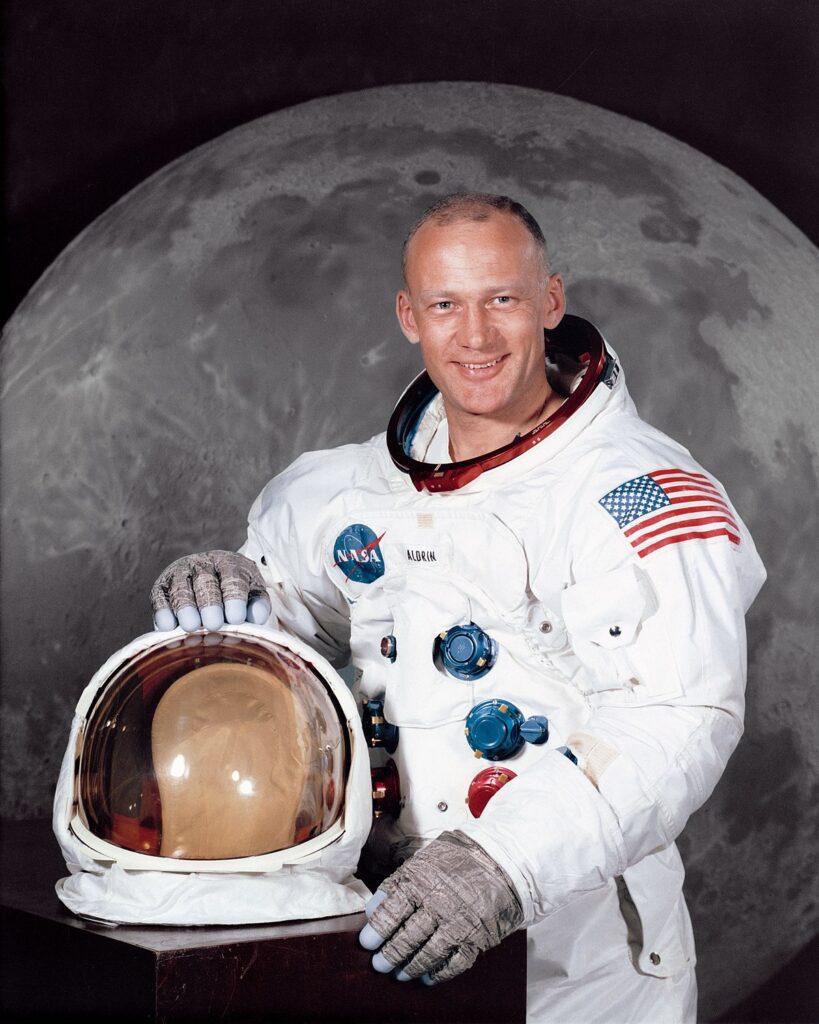
Buzz Aldrin

David praises God because he knows that, wherever he goes, he can never go further than God. No place – however dark – is too dark for God to see. We cannot outrun God. Even the moon! (Did you know – one of the first things that happened on the moon was Buzz Aldrin took communion?)

And God is not just with us all the time, but he guides us and we are held in his hands. God isn’t simply some kind of travelling companion – he’s a guide, a protector, and so on. The reason that God can do all of those things is that God is everywhere, he is unlimited.

Another helpful thing here is that God is able to look after those we love even when we’re miles apart. God is able to answer prayers, even for things which are on the other side of the world. We don’t have to pray for things which are local to us! I find it a great comfort when I’m away from my family to know that they are still in God’s hands, even though they can’t be in mine.

A warning
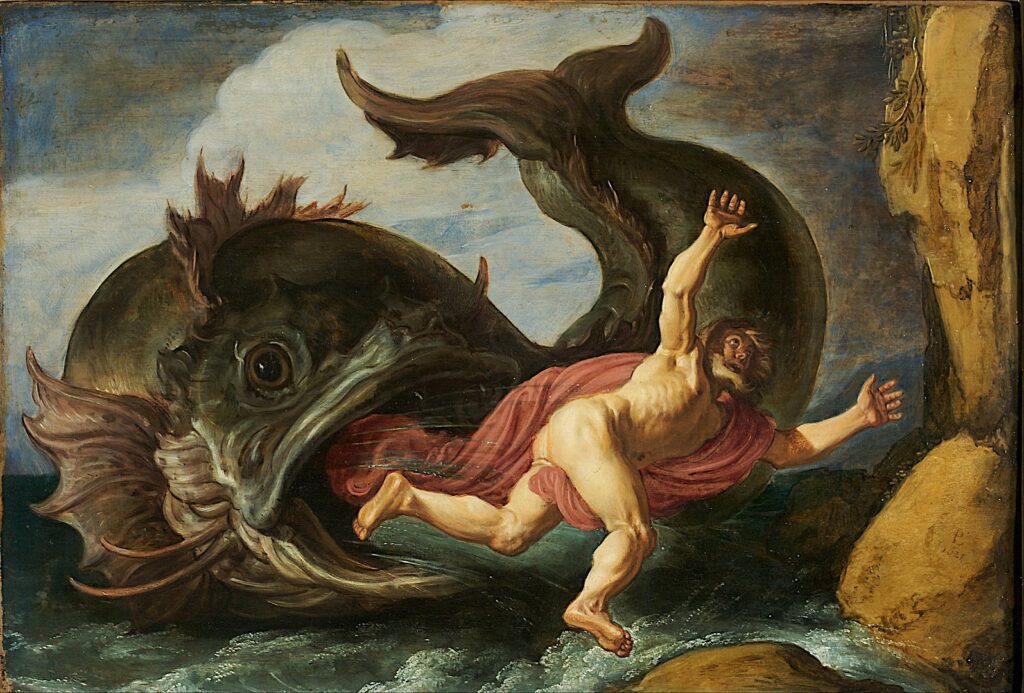
Jonah and the Whale (Painting)

One of the most well-known stories in the Bible is that of Jonah and the whale. If you’re not familiar with the story, you can read it in the Bible (it’s very short!) or there are lots of videos around – like this one for kids. At the start of the story, God calls Jonah to go to the city of Nineveh. Instead, Jonah decides to go in the opposite direction! But he soon finds out that he can’t run away from God.

I think this is an important warning for us to listen to as well: for those who love and trust God, it’s a great thing not to be able to run away from him. For those who do not love and trust God, it’s a warning. In the book of Revelation, on the day of judgement we see people trying to run away from God:

Then the kings of the earth, the princes, the generals, the rich, the mighty, and everyone else, both slave and free, hid in caves and among the rocks of the mountains. They called to the mountains and the rocks, ‘Fall on us and hide us from the face of him who sits on the throne and from the wrath of the Lamb! For the great day of their wrath has come, and who can withstand it?’

Revelation 6:15-17

Obviously, trying to run away from God is futile! This is because we cannot run away from God – he is everywhere.

We need to worship God ‘in spirit and truth’

Earlier on, I quoted John 4:24, where Jesus says “God is spirit”. He continues on: “God is spirit, and his worshippers must worship in the Spirit and in truth”. That means we can’t worship God as if he is some created being. The second of the Ten Commandments expressly forbids worshipping an image of God. The reason is because God is infinitely bigger than any created thing. No statue or anything created could adequately represent God. In fact, any image of God will be a false god – something we thought about in the first session.

God wants us to worship him, but God wants us to worship him in the Spirit and in truth:

In the Spirit means that we can only come to God through the Holy Spirit. We can’t draw near to God like we would a person. With humans beings, we come near to them physically. As God doesn’t have a physical body, we can’t draw near that way! The way to draw near to God is through the Holy Spirit. When we repent of our sins and turn to Christ, when we seek to love, serve and obey God, then we draw near to God. This is how James puts it: “Come near to God and he will come near to you. Wash your hands, you sinners, and purify your hearts, you double-minded” (James 4:8).

Because God is spirit, we can only draw near to him spiritually. It’s not about being a special place e.g. a church or the like – but we draw near to him as we seek and obey him.

In truth means that we need to take on board everything God has said to us about who he is and how he wants us to worship him. Because we can’t see God, it’s all the more important to listen to him rather than simply imagine a God! In Knowing God, Jim Packer quotes the phrase: “for the Christian, the ear is the primary sense organ”. We know about God by listening to him – through his Word, the Bible. If you want to draw near to God, you need to listen to the truth about him.

Finally: this doesn’t mean the body is bad!

One of the mistakes which I think has commonly been made over the last 2,000 years is this: “God is spiritual, and to get close to him I must get more spiritual. Therefore, I should try to avoid anything physical”. A lot of Christians through the ages have decided to be more ‘spiritual’ they should renounce all physical pleasure. Sometimes they do this in quite extreme ways, for example Simeon Stylites lived for 37 years on top of a small platform on a pillar!

The fact that God is spiritual doesn’t mean that the physical is bad. After all, God made the world! God created the world, and made it good. This is something I talk about in the first session of the What is Christianity course.

Being ‘spiritual’ is not about getting away from the physical! Rather, it is learning to use our bodies in a spiritual way. Paul says in 1 Thessalonians 4:3-4, “It is God’s will that you should be sanctified: that you should avoid sexual immorality; that each of you should learn to control your own body in a way that is holy and honourable”. So we shouldn’t avoid anything physical altogether – far from it! Rather, with God’s help we should learn to control our bodies in a spiritual way and enjoy physical things in the way that God intended.

God loves our bodies, God loves the physical world! Being spiritual doesn’t mean being less physical, it just means being physical in the right ways. In fact, I think it means being more physical, because we see the created world as something God made to be enjoyed with him.

Further Reading

Finally, just for a bit of fun, here’s a kid’s song “God is everywhere” by Colin Buchanan…
Share this:

Christ – dead and buried (Heidelberg 16)

Why is it important that Jesus died and was buried – and how do we benefit from it? This session of the Heidelberg Catechism looks at five questions:

  • Why was it necessary for Jesus to die?
  • Why was he buried?
  • If Christ died for us, why do we still have to die?
  • What further benefits do we receive from Christ’s sacrifice and death on the cross?
  • Why does the creed add “He descended into hell”?

As I hope you’ve gathered by now, Jesus’ death and resurrection is at the heart of the Christian faith. Understanding what it means is key to understanding Christianity. If you want to gain a good understanding of the faith, you need to explore deeply questions like these – why Jesus died and was buried!

If you enjoy this, you can do the whole series right here on the website, or on the app (see links on the right hand side of the page). Alternatively, I am uploading them regularly to YouTube and Facebook. All sessions on YouTube are available on this playlist.

Share this:

God is… Everlasting

In the second part of our “Get to know God” series, we’re going to think about how God is everlasting or eternal. The Bible teaches that God has always existed, and will always exist. He doesn’t have a beginning or an end. He is not bound by time in the way that we human beings are. Let’s think about what the Bible has to say about God’s eternity, and then think about how it makes a difference in our lives.

What does the Bible say about God’s eternity?

God never had a beginning

Before the mountains were born
or you brought forth the whole world,
from everlasting to everlasting you are God.

Psalm 90:2

One of the most important things to grasp about God is that he never had a beginning. He has always existed. I know that’s hard to get your head around! We human beings are so used to thinking of things in terms of beginning and ending, that it’s very difficult – if not impossible – to really understand how God could be different. But – that is what the Bible teaches.

This is fundamental to who God is. The universe needs to have a “first cause”. In Stephen Hawking’s famous book A Brief History of Time, he tells this story:

Turtles all the way down
‘Turtles all the way down’

A well-known scientist (some say it was Bertrand Russell) once gave a public lecture on astronomy. He described how the earth orbits around the sun and how the sun, in turn, orbits around the centre of a vast collection of stars called our galaxy. At the end of the lecture, a little old lady at the back of the room got up and said: “What you have told us is rubbish. The world is really a flat plate supported on the back of a giant tortoise.” The scientist gave a superior smile before replying, “What is the tortoise standing on?” “You’re very clever, young man, very clever,” said the old lady. “But it’s turtles all the way down!”

If you think about it for a moment, there has to come something at the bottom of the pile. It’s the same thing with creation. If you ask, ‘who created God?’ then you have to ask ‘Who created the person who created God?’ and so on.

Someone or something had to come first.

Continue reading “God is… Everlasting”
Share this:

There is one living and true God

In the first part of the “Get to know God” series, we are thinking about how God is one. What does it mean for God to be one? Why do we make the point that God is “living” and “true”? Let’s dive in!

How many gods are there?

Hear, O Israel: the Lord our God, the Lord is one.

Deuteronomy 6:4
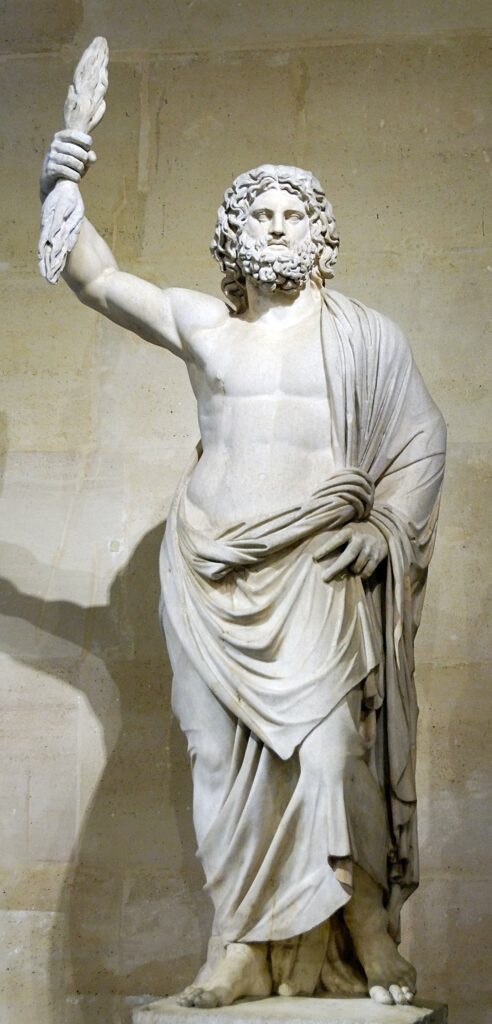
Statue of Zeus
The Greek god Zeus

How do we know there is only one God? The Bible is very clear about it. This verse from Deuteronomy is start of the Shema, which orthodox Jews recite every morning. As they say on that page, “The first verse of the Shema is considered the most essential declaration of the Jewish faith — the Lord is our God, the Lord is one.” Christians and Jews alike believe there is one God. This is known as monotheism, if you want the proper word for it.

This is in contrast to other religions, which believe there are many gods. For example, there are many Hindu gods. The ancient Greeks believed in many gods. such as Zeus – as you can see from the picture.

So, what difference does it make believing there is only one God? Let’s spend a few moments thinking about it.

What is the significance of one God?

1. There are no other gods

This is simply a matter of basic logic. If there is only one God – then there are no other gods. The Bible often contrasts God with ‘the gods of the nations’. For example, Psalm 96:5 says, “For all the gods of the nations are idols, but the Lord made the heavens”. (An ‘idol’ here is something which is worshipped as a god but is not God. If you’d like to look into idolatry more, check out this session from the Heidelberg Catechism course). God, the God of the Bible, is one God. He made everything, and there are no other gods.

This is significant for how we see other religions: Christians believe that Muslims, Buddhists, and Hindus (for example) are mistaken about their gods. Believing in the God of the Bible means not believing in other gods. We can’t pick and choose!

2. There is order, not chaos

Imagine if there was more than one god, like the ancient Greeks. Imagine one god decided that we should be kind to each other. Another god contradicted him and decided that we should be nasty to each other. Whose will should win out? The ancient Greek legends are full of stories of gods warring with each other. If you think about it, it’s absurd: what kind of god would need to war with another god? If God is truly God, then he cannot have any rivals!

This is significant for us, because it gives the universe – and our lives – meaning. The universe is not chaotic, but rather it has an order and purpose. God, the Creator, has made everything for a reason. He has put you here for a reason. He has given you your gifts, interests, circumstances and so on for a reason. They are not simply the product of a chaotic universe.

This is so important to understand. The universe did not come into existence by chance – it was created for a reason. God made the universe with his wisdom behind it. You have been made for a purpose. If there were multiple gods, we couldn’t be sure of that at all. This can only be true if there is one Creator who stands behind creation.

3. There is one set of rules

Lady Justice and the scales of justice

Another significance of there being one God is that there is only one set of rules. Because God made the universe, he sets the rules. God has the sole right to set the rules as our sole Creator.

We recognise something of this today. For example, intellectual property recognises that if you create something, you should have certain rights over it. You can’t simply steal someone else’s creation and pass it off as your own. In law, it belongs to them and they alone have the right to use it. They have the rights because they are the creator.

It’s the same with God: God created the universe, therefore he alone has ‘rights’ over it. We are living in his world, and he gets to set the rules. Fortunately for us, he is a good and loving God – we will come onto that. But let’s move on for now.

What is the significance of a living God?

You might think this is a rather pointless word to put in. Why should we specify that God is living – after all, God isn’t dead! (German philosophers notwithstanding…). The point being made here is not that God is living rather than dead. The point is that God is a personal living being – rather than some kind of impersonal force.

Let’s consider a couple of examples of beliefs where gods are not living.

Non-living gods 1: Deism

What is Deism? According to this page:

Deism (derived from Latin “deus” meaning “god”) is a philosophical belief that posits that God exists as an uncaused First Cause ultimately responsible for the creation of the universe, but does not interfere directly with the created world. … It also rejects revelation as a source of religious knowledge and asserts that reason and observation of the natural world are sufficient to determine the existence of a single creator or absolute principle of the universe.

So, in Deism, there is one God – but it is very unlike the Christian God. The Deist God is basically the source of everything in the world, but one who is not involved in the universe day-by-day. You can’t pray to or have a relationship with the Deist God. This kind of belief is still alive and well today – in fact, let’s look at the example of Jordan Peterson.

Non-living gods 2: Jordan Peterson

Jordan Peterson has made a name for himself by looking at Biblical texts such as Genesis to try and find meaning in the world. He sometimes talks about “God” – but what does he mean by that? Merion West argues:

Peterson’s conception of God is best understood as being the individual human being’s self-conscious relationship with what they value … For Peterson, as for Tillich, God is a term individuals apply to what is of “highest concern” to themselves. For the rich man, this is money. For the scientist, it is knowledge of the world as it truly exists.

This is very different to the Christian concept of God! For Peterson, God is not a personal being who you can relate to. In a nutshell, for Peterson, God is not a living being. This is why it’s important to say that God is living!

What does the Bible say about God living?

The Bible is full of language about God living. There are hundreds of verses we could look at. One of the most significant is Revelation 4:11:

‘You are worthy, our Lord and God,
to receive glory and honour and power,
for you created all things,
and by your will they were created
and have their being.’

This verse says that God didn’t just create everything, but he sustains everything as well. We have our being in God. God is not some kind of Deist God, who simply made everything and then disappears. He creates and sustains everything, moment-by-moment.

Not only that, but he wants us to relate to him. The early chapters of Genesis make clear that God created man to be in relationship with him. For example, Genesis 3 tells of when God was “walking in the garden in the cool of the day” – and speaks to Adam and Eve. From the very beginning of the human race, we have been made for relationship with God. (If you’d like to explore more of what Genesis means for us, the first two sessions of the What is Christianity course cover this).

As the apostle John puts it, God is love (1 John 4:8). You could not describe an impersonal force or an idea in this way! God is fundamentally relational and loving. This is why we need to describe God as ‘living’.

What is the significance of a true God?

Finally, let’s look at God being “true”. Why describe God as true – isn’t that just redundant? After all, God can’t by false, by definition, can he?

I think this, again, is more to do with our ideas about God rather. Unfortunately, we human beings have a tendency to create God in our own image. We have a tendency to create ‘false gods’, or idols.

What is a false god?

Ganesha Virjan, picture from Clacton

A false god is anything that we worship as a god, but which is not God. You might naturally think of idols or statues of gods. These were commonly worshiped in the ancient world, and – as you can see in the picture – are still worshiped today.

However, a false god doesn’t have to be something we consider a god. False gods can be intangible. For example, let’s take money: money can be a god for some people. It controls everything they do; they will do anything to get more of it. They’ll even sacrifice friends and family for money. Essentially they are worshiping money. There are many other things which can become false gods – for example, career, power, family, sex, and so on.

It’s even possible to worship a false god when we think we’re worshipping the true God. We humans are very capable of coming up with our own novel ideas about God. For example, have you ever heard anyone say: “I like to think of God as…”? This is why it’s so important to get to know know God. When we come up with our own ideas about God, we are in danger of worshiping a false god.

If you’d like to read a book which helps explain this in much more detail, I can highly recommend Counterfeit Gods by Tim Keller. You might also like the session What is idolatry? which is part of the New City Catechism course.

What does the Bible say?

The second commandment commands us not to worship images that we make of God (Exodus 20:4-5). God cares about how we worship him. God doesn’t want us to worship a false God – he wants us to worship him alone!

God must be the one who tells us who he is. Throughout the Bible, God is the one who reveals himself to us. He takes the initiative. We don’t reach out to God, he reaches out to us and reveals himself to us.

For example, there’s a very famous moment in the book of Exodus. Moses is on a mountain – when he receives the Ten Commandments. But before that, God reveals himself to Moses:

And he passed in front of Moses, proclaiming, ‘The Lord, the Lord, the compassionate and gracious God, slow to anger, abounding in love and faithfulness, maintaining love to thousands, and forgiving wickedness, rebellion and sin. Yet he does not leave the guilty unpunished; he punishes the children and their children for the sin of the parents to the third and fourth generation.’

Exodus 34:6-7

Here, God reveals himself as compassionate and gracious. But – he is also a God of justice, who punishes sin. It’s so easy for us to focus on the one rather than the other! We human beings love to think about God as loving and compassionate. We don’t like so much the fact that he is a judge. But God is both – and we must let him define who he is.

If we don’t let God be who he says he is, then we are worshiping a false God.

Further Reading

Here are all the resources I’ve pointed to. If you’d like to explore this topic further, you could start here.

  • The What is Christianity course looks at our creation;
  • This session from the Heidelberg Catechism course looks at the first commandment and its significance;
  • The What is idolatry? session from the New City Catechism course goes into idolatry in more detail;
  • The book Counterfeit Gods by Tim Keller is fantastic if you want to explore what idolatry looks like in the 21st century and how we can see it in ourselves.
Share this:

Get to know God – new series!

Do you want to get to know God better? In that case, good news! I have decided to start a new series here on Understand the Bible. It’s been something I’ve had on my mind for a while, but I finally feel the time is right. I’ve been re-reading Jim Packer’s classic book Knowing God lately, and it’s struck me again how good it is to focus on God for a while. At the end of the day, that’s what the Christian life is all about – getting to know God. This is how Jesus described eternal life:

Now this is eternal life: that they know you, the only true God, and Jesus Christ, whom you have sent.

John 17:3

That’s the point of life – to know God. If we’re going to be spending eternity with him – we’re going to get to know him pretty well! And the best news is, we can start right away.

Why should we get to know God?

This is how the great preacher C.H. Spurgeon once started a sermon on this subject (Jim Packer quotes this in Knowing God):

The highest science, the loftiest speculation, the mightiest philosophy, which can ever engage the attention of a child of God, is the name, the nature, the person, the work, the doings, and the existence of the great God whom he calls Father.

… Oh, there is, in contemplating Christ, a balm for every wound; in musing on the Father, there is a quietus for every grief; and in the influence of the Holy Ghost, there is a balsam for every sore. Would you lose your sorrow? Would you drown your cares? Then go, plunge yourself in the Godhead’s deepest sea; be lost in his immensity; and you shall come forth as from a couch of rest, refreshed and invigorated. I know nothing which can so comfort the soul; so calm the swelling billows of sorrow and grief; so speak peace to the winds of trial, as a devout musing upon the subject of the Godhead.

Spurgeon could certainly turn a phrase! When we lift our eyes from our circumstances to God, it’s hugely comforting. We need to look less at ourselves and our situations and more at our Creator. Knowing God is not simply an intellectual exercise – although it’s good for our minds as it helps us to think – but it’s an immense comfort. When we see how big God is, we realise that he’s bigger than any of our problems!

How do we get to know God?

We primarily get to know God through studying his word, the Bible. God has revealed himself to us in his word, and we get to know him by reading it. However, in my experience, a bit of guidance can be very helpful in this regard: the truths about God are everywhere in the Bible. But there is no one place where God just comes out and says it all concisely. We need to dig a little and bring up lots of different places through the Bible.

This is where we need a roadmap, a guide, to help us navigate through the Bible clearly. For this series, I’m going to be using the Anglican 39 Articles. The very first article is, “Of Faith in the Holy Trinity”, which says:

THERE is but one living and true God, ever- lasting, without body, parts, or passions; of infinite power, wisdom, and goodness; the Maker, and Preserver of all things both visible and invisible. And in unity of this Godhead there be three Persons, of one substance, power, and eternity; the Father, the Son, and the Holy Ghost.

OK, I know that’s quite dense! But as a framework, it’s great. It will help guide us as we start to look at who God is. We’re going to break it down and take it bit by bit.

Get to know God – roadmap

This is how I’m planning to break it down. God is…

  1. One – living and true
  2. Everlasting
  3. Everywhere – without a body, spiritual
  4. Without parts – sometimes called God’s “simplicity” (don’t worry, I’ll explain)
  5. Impassible (without passions) – God is unable to suffer
  6. Infinitely powerful (omnipotent)
  7. Infinitely wise
  8. Infinitely good
  9. The maker and preserver of all things
  10. Three persons – Father, Son, and Holy Spirit (Trinity)

In each part of the series we’ll look at the Bible and what it says, then we’ll think about what it means for us. In other words, this series will be practical. My aim is not just to help you to think about God, but to encourage your own faith.

Join in – let’s get to know God together!

I will be publishing these here on the blog over the coming weeks. Once they’re all done, I hope to turn this into a video course.

If you’d like to get these posts delivered by email, sign up for the Mailing List, where you’ll get a weekly digest with everything that’s been created that week.

Share this:

What does Christ’s suffering mean? (Heidelberg 15)

In this session of the Heidelberg, we look into the suffering of Christ. There are three questions:

  • What does it mean that Christ suffered?
  • Why did he suffer under Pontius Pilate as a judge?
  • Does it have a special meaning that Christ died by crucifixion and not in some other way?

The point of the session is to say that Christ’s suffering was not random or pointless, but there was a particular meaning for it. It’s important for Christians to spend some time thinking about.

If you enjoy this, you can do the whole series right here on the website, or on the app (see links on the right hand side of the page). Alternatively, I am uploading them regularly to YouTube and Facebook. All sessions on YouTube are available on this playlist.

Share this:

What’s the point of The Virgin Birth? (Heidelberg 14)

Now that I’ve finished the How to Live as a Christian course, I’ve gone back to uploading the Heidelberg Catechism series. This week, it’s part 14 – on the virgin birth. This is a topic where there’s a lot of misunderstanding.

Sometimes people misunderstand the virgin birth with the “immaculate conception” – this is a Roman Catholic doctrine which says that Mary was sinless when she gave birth to Christ. Most protestant churches do not believe in the immaculate conception – but it’s a common misunderstanding.

I think it’s more common to simply not understand why Mary needed to be a virgin to give birth to Christ. I mean, why couldn’t Jesus have been born in the normal way? Wasn’t he a human being?

The truth is that the virgin birth touches on a lot of important issues about who Jesus is.

In this session we look at two things:

  • What does it mean that Jesus was conceived by the Holy Spirit and born of a virgin?
  • How does it benefit you?

I hope you enjoy.

If you enjoy this, you can do the whole series right here on the website, or on the app (see links on the right hand side of the page). Alternatively, I am uploading them regularly to YouTube and Facebook. All sessions on YouTube are available on this playlist.

Share this:

Heidelberg Catechism: #11 Jesus the only Saviour

Over the last few weeks I’ve started uploading the Heidelberg Catechism videos to YouTube and Facebook – one each Monday. Today I just uploaded #11 – Jesus the only Saviour.

If you’d like to do the whole course, you can sign up (free) for the Teaching Programme. If you’d prefer just to watch individual videos, they are all available on this YouTube Playlist.

Share this:

Heidelberg vs New City Catechism

As of 2024, The Heidelberg and New City courses are no longer available here on the website, but some remain on the YouTube channel (See the Heidelberg playlist). However, they have been superseded by newer courses here. Check out the Firm Foundations Course on YouTube, or get the App for more!

I have just uploaded the final part of the Heidelberg Catechism series. That means that all three parts – one, two and three – are now available! 52 sessions all done and dusted. (OK, you got me, there are actually 51 because I skipped one session about oaths which I thought was less relevant to the 21st century, but still). Over the last few months, as I’ve been recording this, I’ve found it a real joy to go through the catechism. I thought, seeing as I’ve already worked my way through the New City Catechism (you can see the course here), it might be worth doing a head to head comparison – the Heidelberg vs New City Catechism.

In summary, over the past few months I’ve enjoyed doing the Heidelberg videos more than I did the New City Catechism ones. Here are a few points where I prefer the Heidelberg to the New City Catechism.

It’s warmer

The Heidelberg is not simply an intellectual exercise – it’s designed to be deeply pastoral. That is, the catechism doesn’t just want you to know things, it wants you to believe things and act on them as well. That’s really important: if the gospel and the Bible doesn’t make a difference in our lives, then we haven’t really grasped its significance.

This really hit me the other day when I was preaching on Titus 1:1-4, these words jumped out at me: “Paul, a servant of God and an apostle of Jesus Christ to further the faith of God’s elect and their knowledge of the truth that leads to godliness” – the truth that leads to godliness. That’s what the Heidelberg is concerned with, not simply ‘the truth’ as information but the truth as life-changing.

Now, of course the NCC is concerned with our lives as well as our doctrine. But I feel that the wording of the questions in the NCC is a bit more ‘academic’ – if you want the warmer, pastoral stuff you have to read the explanatory notes and the prayer (something which I do appreciate being in the NCC). But if you are just comparing the Q&As, I think the Heidelberg has a more pastoral and warmer tone. It tends to avoid theological jargon words and explain things within the Q&A more.

It’s more connected to the Bible

One of the things I really like about the Heidelberg compared with the New City Catechism is that the Heidelberg footnotes each part of the catechism with verses from the Bible. This is really helpful – if you want to learn where they are drawing the catechism from, you can look up the Bible verses and it helps you to put the pieces together. In fact, very often the language of a question or answer is taken directly from the Bible.

I think the Heidelberg does a great job at connecting the catechism with the pages of the Bible (which is why I think it goes so well with the mission of this site – to Understand the Bible better).

The NCC, by contrast, just has one Bible verse per Q&A. As a teacher, I’ve actually found it much easier to teach the Heidelberg because it gives you the Bible passages to go on.

It’s more detailed

One of the things which I appreciated about the Heidelberg when compared to the New City Catechism was the way it expanded on things. The New City Catechism Q&As are very dense – they use a few words to talk about a lot of complicated concepts. In order to get the best out of the New City Catechism you really need to read the explanatory notes written by various different authors. The problem with that is, different authors will take different aspects of the catechism to focus on – I found it could be a little uneven.

With the Heidelberg, there are no explanatory notes – everything is contained within the questions and answers – and it often goes into more detail about things that you want to know, case in point: talking about what the word ‘amen’ means at the very end of the catechism (finishing the Lord’s Prayer).

Conclusion

All in all, both the New City and the Heidelberg catechisms are good and will teach you the Christian faith. The New City definitely has some advantages – I like the app (although I found it didn’t remember where I was up to, which was a pain). It’s in modern language, and it includes a prayer. But, as a teacher, my preference is the Heidelberg – it’s just so much easier to teach. It’s not dense, you don’t have to unpack lots of theological words like ‘sanctification’. And the way it connects directly with Bible verses means you can easily link the two together.

You can watch or listen to all the Heidelberg and New City Catechism sessions in the teaching programme.

Share this:

Heidelberg Catechism – Part two now available

I’ve just released Part 2 of the Heidelberg Catechism. The Heidelberg is divided into three parts, which you could summarise “Guilt”, “Grace”, and “Gratitude”.

This second part is focussed on the grace of God and our salvation.

I’ve really enjoyed working my way through the videos on the Heidelberg – it’s particularly good at linking the Bible with the catechism, each Q&A has Bible verses which you can look up.

If you’ve not done it before – why not give it a try?

Share this: