News

Mark 3:20-35 – Learn to read the Bible #13

I’ve just published the 13th part of the Learn to read the Bible series on Mark’s Gospel. This week we are looking at Mark 3:20-35, when Jesus is accused by both his family and the teachers of the law.

For those who are coming to this new, the idea behind this series is not for me to simply explain everything to you, but rather to give you things to think about yourself. This is about training you to read the Bible for yourself, rather than just giving you all the answers!

See this page if you’d like a few pointers for how to use these videos. Don’t forget to pray!

You can read the passage online here (although I’d suggest it’s better in a physical Bible). You may also want to have a pen and paper handy to jot down notes and things you want to look into more.

Key points from Mark 3:20-35

There were three key points to think about from this passage:

  1. Jesus’ family thought that he was out of his mind. This is often the case in families: if someone starts to believe in Jesus, it can cause tension or division within the family. Is that the case in your experience? Are you prepared for following Jesus to cause problems in your relationships?
  2. The teachers of the Law thought that Jesus was possessed by Beelzebul – Satan, the “prince of demons”. They essentially claimed that what Jesus was doing was evil. Sadly, this is increasingly common in our society: Christians are not just seen as weird but immoral. Is that something you have seen? Are you prepared to put following Jesus first, even though people might wrongly think of you as immoral? (Stephen McAlpine has just written a new book called Being the Bad Guys which you might appreciate).
  3. Jesus’ family try to use their influence over him because they are family. But Jesus says that his true family are those who believe in and do the will of God the Father. The spiritual family is just as real and even closer than the biological family. Do we see other Christians like that? Do we see fellow Christians as our true family? How can we love them and demonstrate being a family?

Looking for more?

You can see the rest of the videos in this series on the this page. If you’d like a more focussed series teaching the Christian faith, check out the teaching programme.

You might also want to see the previous episode in the series on Mark 3:13-19.

Share this:

What does a good person look like? – Psalm 15

Psalm 14 tells us what a good person is. Psalm 15 tells us what a good person actually looks like in practice.

This is part of the weekly Thought for the Week series. This series is designed to give a short, 10-15 minute ‘thought’, including a Bible reading and a prayer. At the moment I am working my way through the Psalms but I may take a break from them after a while and look at another part of the Bible.

Do subscribe to the mailing list if you want to get these delivered by email, or subscribe directly on YouTube if you want to see them there.

You can see the previous week’s thought on Psalm 14 “What makes a good person?” here.

Share this:

A surprising Saviour – Micah 5:1-5 Sermon

Micah 5 is the prophecy of a Saviour who might surprise us. The Saviour prophesied here looks very different from the way we might have imagined him to be, in many different ways.

Read the passage online via Bible Gateway.

Enjoyed this sermon? See more on the sermons page.

Share this:

Why should we use liturgy? – Your questions answered

A lot of people think the only way to pray properly is for everything to be spontaneous. But I think there are good reasons to use services and prayers which are written, as well as spontaneous prayers. Here are four reasons why it’s important to use liturgy.

The key points

  1. We all use liturgy, whether it’s written down or not. If the liturgy we use is written down, we can judge it against the Bible.
  2. God often repeats things – it’s how we learn. Things often go in deeper when we repeat them – especially when we’re young. (I didn’t mention it in the video, but you might like the book You are what you love by James K.A. Smith)
  3. Good liturgy teaches us to worship God. Good liturgy doesn’t just help us to worship God in that moment, but it teaches us to worship God day-by-day. It shapes our whole attitude to God.
  4. The most important thing is our hearts. It’s possible to read the words from a page like you’re reading the newspaper – but that doesn’t have to be the case. Whether words are written or whether they are spontaneous, they can and should come from the heart.

Explore further

Part two of the How to live a Christian course is about prayer.

Part three of the Heidelberg Catechism course goes through the Lord’s Prayer – starting with session 45 on prayer.

Your questions answered

This is the fourth video for the Your questions answered feature. See the rest of the series on that page.

If you have a question about Christianity or the Bible, please send them in or comment below.

Share this:

The Church and Forgiveness (Heidelberg 21)

In this session we take a closer look at the church – what is the church, and what does it mean for us to be part of it? We also think about forgiveness of sins and how struggling can be a good sign in the Christian life…

There are three questions in this session, focussing on the lines in the Apostles’ creed: “I believe in the Holy Catholic church, the communion of saints, the forgiveness of sins”. These are the main things we look at:

  • Firstly – a note about the “Catholic” church. This just means ‘universal’ rather than the Roman Catholic church.
  • Q54: What do you believe concerning the holy catholic church? – what the church is, and what it means for us to be a member of it.
  • Q55: What do understand by the communion of saints? – how do we relate as Christians to other members of the church?
  • Q56: What do you believe concerning forgiveness of sins? – it feels a bit tacked on at the end but it’s fundamental! What is forgiveness in the Christian life, in summary?

If you enjoy this, you can do the whole series right here on the website, or on the app (see links on the right hand side of the page). Alternatively, I am uploading them regularly to YouTube and Facebook. All sessions on YouTube are available on this playlist.

Share this:

Mark 3:13-19 – Learn to read the Bible #12

I’ve just published the 12th part of the Learn to read the Bible series on Mark’s Gospel. This week we are looking at Mark 3:13-19, when Jesus calls the twelve disciples.

For those who are coming to this new, the idea behind this series is not for me to simply explain everything to you, but rather to give you things to think about yourself. This is about training you to read the Bible for yourself, rather than just giving you all the answers!

See this page if you’d like a few pointers for how to use these videos. Don’t forget to pray!

You can read the passage online here (although I’d suggest it’s better in a physical Bible). You may also want to have a pen and paper handy to jot down notes and things you want to look into more.

Key points from Mark 3:13-19

  • There were many people who followed Jesus. Here, Jesus calls twelve people to him to be with him so he could teach them and give them a special job to do.
  • What’s the significance of the number twelve? – you might want to look up the tribes of Israel. Do you think Jesus is making a statement about what he has come to fulfil?
  • He called the twelve to preach and cast out demons. Those are things that we’ve seen Jesus do already in Mark’s gospel. Our lives are supposed to look like Jesus’, and Jesus gives us tasks to do. What is God calling you to do? How can we preach the gospel and help other people be free from the sin and evil which affects them?
  • Jesus gave a nickname to James and John – the ‘Sons of Thunder’. Jesus had real, human relationships with people. He knows all about us as well – warts and all. Does it help to think that Jesus knows all about us and loves us (even if we need to change)?
  • Jesus called Judas Iscariot, who (as the text reminds us) “betrayed him”. Think about how God was working even here. God is able to work in our lives even before we know he’s working, or even when it seems like things go wrong. Think about that in relation to what’s going on in your own life right now.

Looking for more?

You can see the rest of the videos in this series on the this page. If you’d like a more focussed series teaching the Christian faith, check out the teaching programme.

You might also want to see the previous episode in the series on Mark 3:7-12.

Share this:

Why you should read Schaeffer – True Spirituality

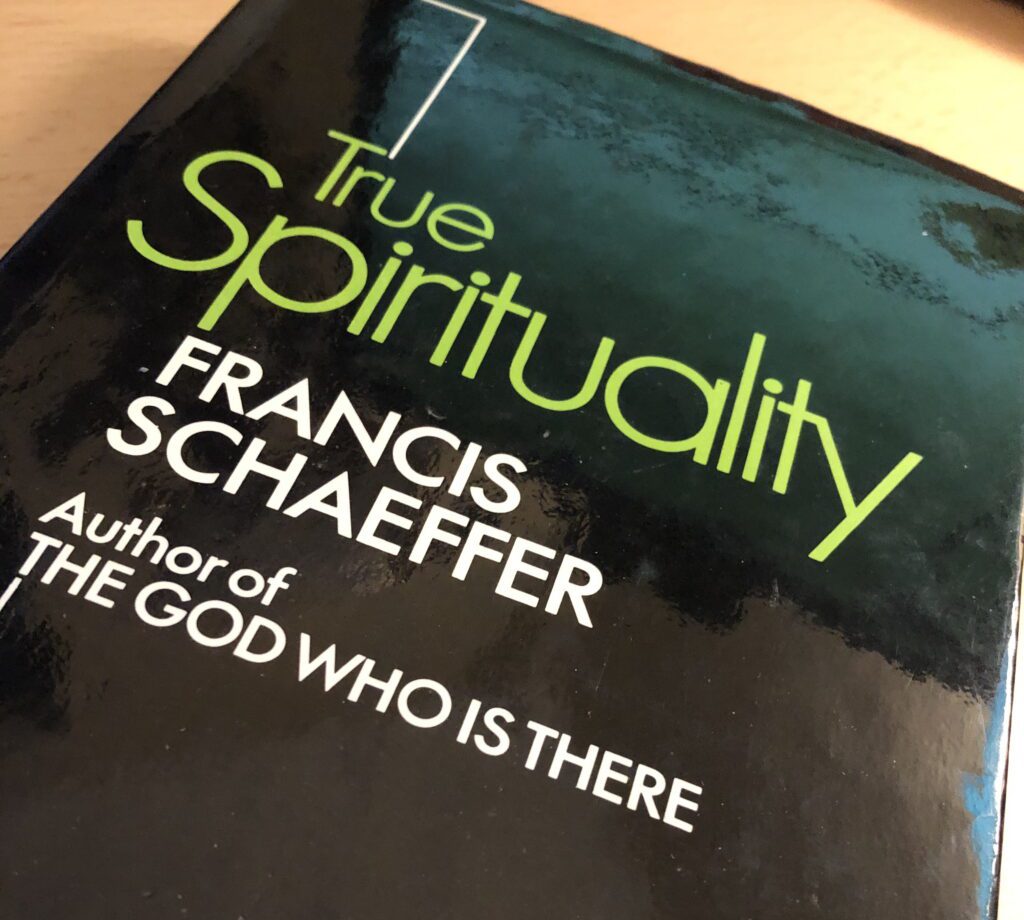
Cover of True Spirituality

I’m starting a new feature, “Books you should read”. Christian books can be a very helpful way of learning to understand the Bible. I’ve found many books to be helpful in my own life, and I’d like to share the most helpful with you. One of the most helpful books I’ve read has been True Spirituality by Francis Schaeffer. Let me explain what the book means to me and why you should read it.

In short – I think that no book has had a more profound effect on my understanding of the Christian life than this one.

True Spirituality is more than knowledge

Schaeffer’s primary consideration with True Spirituality was that of living a Christian life. He realised that we couldn’t simply ‘keep the rules’. We can’t just look at the 10 Commandments and say, with the rich man who came to Jesus, “all these I have kept since I was a boy” (Mark 10:20). The problem is not that we don’t know the 10 Commandments – the problem is that we don’t have the power to be able to keep them.

It’s the same thing with the Bible in general: it’s not enough simply to know about God. We need to know him and the power of the Holy Spirit. We need a deeper transformation than simply trying really hard. We need to be transformed from the inside out, so that we might obey God’s deeper laws of love.

True Spirituality is the life that comes, not from our own efforts, but walking in step with the Holy Spirit. We don’t have the power within ourselves, but only through God’s power working in us. When we do walk with God, we can have a true (if imperfect) love for him and for others. Our obedience does not have to be grudging or perfunctory but heart-felt.

Let’s look briefly at his argument.

The gospel is more than simply forgiveness

I think many churches teach that the gospel is about forgiveness. Forgiveness is good – but it’s only half the story! Jesus died that we might be forgiven, but he was also raised to new life so that we might have new life in ourselves. This is what Schaeffer says:

This is the basic consideration of the Christian life. First, Christ died in history. Second, Christ rose in history. Third, we died with Christ in history, when we accepted Him as our Saviour. Fourth, we will be raised in history, when He comes again. Fifth, we are to live by faith now as though we were now dead, already have died. And sixth, we are to live now by faith as though we have now already been raised from the dead.

We are to live as though we have now already been raised from the dead. In other words, one day we will be raised immortal, at the resurrection of the dead. However, we can begin living the resurrection life in the here and now. We aren’t simply forgiven of our sins, but we are given a new power to live a risen life while we are still in this body.

What is it exactly that gives us the power to live a risen life now? The Holy Spirit.

The power of the Holy Spirit in us

What makes the difference? This is the Holy Spirit, not just a ‘new idea’. It is not to be in our own strength. … Surely, as we look at the book of Acts, we find in the early Church not a group of strong men labouring together, but the work of the Holy Spirit bringing to them the power of the crucified and glorified Christ. It must be so for us also.

The Holy Spirit is the third person of the Trinity, the one who brings the very presence of God to our lives. We don’t labour and work in our own strength. Schaeffer makes the point that the early church (in the book of Acts) was not comprised of a “group of strong men”. In fact, the first time we meet the disciples in Acts, they are hiding away in a house out of fear! What changes them into men of courage is the coming of the Holy Spirit. The Spirit gives them power to proclaim the gospel boldly, to go out into the streets and preach the good news.

It’s really important to understand this. The Christian life is not a life where we need to feel strong: we are supposed to feel weak. We are supposed to know our own limitations, and to depend on God. It is, in fact, only when we come to the limits of our own strength that we recognise our need for God.

We should live ‘supernatural’ lives now

Our lives now, then, should be supernatural:

Whatever is not an exhibition that God exists misses the whole purpose of the Christian’s life now on this earth. According to the Bible, we are to be living a supernatural life now, in this present existence in a way that we shall never be able to do again through all eternity. We are called upon to live a supernatural life now, by faith.

What does it mean to life a supernatural life? It means living a life which is free of the constraints we impose upon it. Too often we limit life to what we think we can make of it. We limit ourselves to what we think we can do, or what we think is reasonable to achieve. But what if God really is there? What if God really has called us? What if we really can pray for anything, and God will answer (John 14:14)?

Living a supernatural life now is living a life believing and trusting in God’s promises. It is taking hold of God’s promise that he has transferred us from the domain of darkness into his marvellous light. We believe and trust that he can sanctify us and give us the power and freedom to love God and love others. We are no longer slaves of sin but slaves to righteousness.

This is what it means: not just simply knowing about the promises of God, but believing them.

Conclusion

In the rest of the book, Schaeffer goes on to apply his thinking to areas of life including our own lives, our relationships, and the church. You’ll have to read the book if you want to find out what he says!

But I think his book, despite being first published in 1972, is still of enduring relevance today. Much of Schaeffer’s experience of the church back then is also true today. Unfortunately I think a lot of people know a lot about the Bible and the Christian faith, without necessarily putting it into practice. His work stands today as a challenge to the church to put down deeper roots into the gospel.

I think this book is doubly important in 2020, when our society is being driven further and further apart: so many issues are divisive today. We are divided about politics, about the economy, about the coronavirus. What the church needs to do is show the world what a true community of love looks like – not divided, but united. Not standing in our own strength, but in the power of the Holy Spirit.

There are lots of cheap second-hand copies of the book available on AbeBooks.

Share this:

What makes a good person? – Psalm 14

Do you think of yourself as a good person? Why do you think that? Psalm 14 helps us to understand what makes a good person – and it may surprise you.

The other video I mention is available here on the website, part of the “What is sin?” course.

This is part of the weekly Thought for the Week series. This series is designed to give a short, 10-15 minute ‘thought’, including a Bible reading and a prayer. At the moment I am working my way through the Psalms but I may take a break from them after a while and look at another part of the Bible.

Do subscribe to the mailing list if you want to get these delivered by email, or subscribe directly on YouTube if you want to see them there.

You can see the previous week’s thought on Psalm 13 “When trouble seems to go on forever” here.

Share this:

From darkness to light – Isaiah 60 Sermon

It seems like we are living in dark days at the moment. 2020 has been a very strange year for everyone. But there have been dark times before. The people of Israel in the Old Testament experienced lots of dark times – yet Isaiah here prophecied of how that darkness would turn to light.

This sermon looks at the darkness, the light, and how God was going to bring them from one to the other. The good news is, it’s something which is for us as well!

Read the passage online via Bible Gateway.

Enjoyed this sermon? See more on the sermons page.

Share this:

How does God guide us? – Your questions answered

Guidance is something we’re all looking for. What career should I choose? Who should I marry? Whenever we’re facing big decisions (or even small decisions!) we want to know what the right choice is. As Christians, we believe that God guides us. But how?

Here’s a brief video which introduces the big picture of how God guides us today.

How God guides us: key points

  • We need to look at the big picture of what God wants us to do with our lives.
  • The big picture is found in the two greatest commandments (love God and love our neighbour) – Mark 12:29-31.
  • How do we know what that actually looks like?
  • We love God by asking him to help us – Psalm 25:4-5. God loves us when we ask him for his help and guidance.
  • The 10 Commandments are a guide to how we love others – they’re God’s framework for helping us know how to love.
  • The rest of the Bible helps us to understand what God’s will is for us.
  • You could sum it up in Proverbs 3:5-6.
Trust in the Lord with all your heart
   and lean not on your own understanding;
in all your ways submit to him,
   and he will make your paths straight.

Explore further

Proverbs is great for guidance. You might be interested in the Wisdom of Proverbs: Guidance.

You might also appreciate this sermon on guidance from Proverbs 16.

Also check out session #9 of the Heidelberg Catechism, God our Father.

Your questions answered

This is the fourth video for the Your questions answered feature. See the rest of the series on that page.

If you have a question about Christianity or the Bible, please send them in or comment below.

Share this: